Finding What Was Lost: Lessons from Luke 15
More Than Just Three Parables
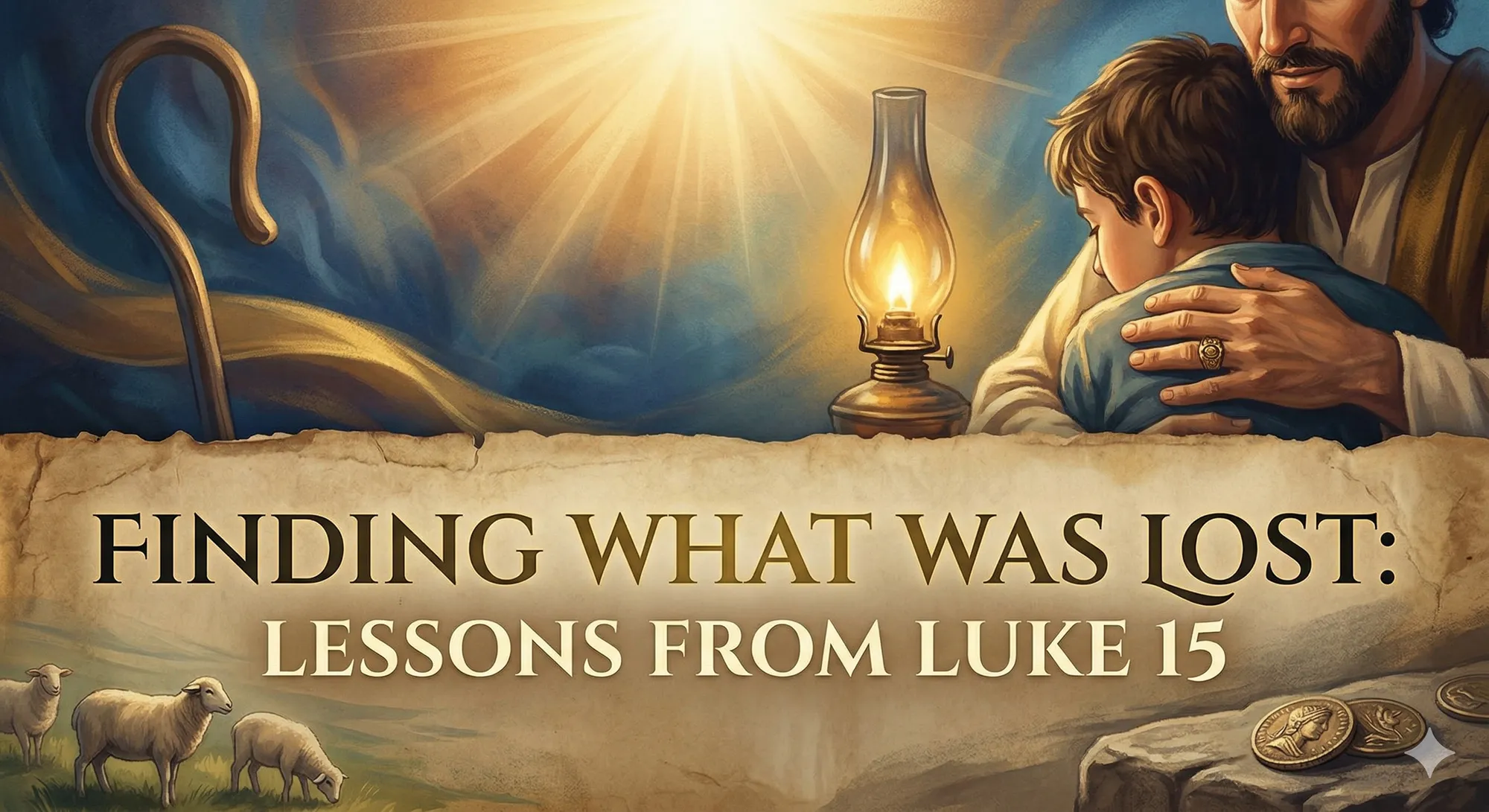
While many of us view Luke 15 as a collection of three parables, there is a subtle structural shift. The stories of the Lost Sheep and the Lost Coin are parables—spiritual illustrations using hypothetical scenarios. However, the story of the Prodigal Son is presented as a historical event, beginning with the definitive statement, "There was a man".
Together, these three accounts provide a complete picture of how we experience "loss" in our spiritual lives and how God orchestrates our recovery.
1. The Lost Sheep: Public Failures
The first account tells of a shepherd leaving 99 sheep to find the one that went astray.
- The Context: This represents external or public sins—the times we stumble in our social or public lives.
- The Shepherd's Heart: This is a picture of Jesus Christ. He doesn't wait for the sheep to find its way back; He actively goes out to seek it.
- The Takeaway: We have a community responsibility. That "one" missing person isn't just a statistic; they could be the greatest blessing waiting to be restored.
2. The Lost Coin: Hidden Struggles
Next, we see a woman diligently searching her home for a lost silver coin.
- The Context: This represents internal or personal losses—struggles that happen within the "house" of our souls, our homes, or our churches.
- The Light of the Word: The woman uses a lamp to search. This represents the Holy Spirit using the "light" of God’s Word to reveal hidden flaws or areas where we have lost our way.
- The Danger of Drift: Just as a coin rolls further away the longer it is left, internal sins can drift and worsen if we don't allow the Spirit to "sweep" our hearts.
3. The Prodigal Son: The Choice to Return
The final story is the most famous: a son who deliberately leaves his father’s house.
- The Context: This represents a deliberate turning away from a relationship with the Father.
- True Repentance (Metanoia): Unlike the sheep or the coin, the son had to "come to himself." Recovery here requires self-realization and the voluntary choice to return home.
The Father’s Protection: Understanding "Kassas"
One of the most moving insights from this sermon is the cultural context of the Father’s run. In that era, a son who squandered his family's wealth faced a ceremony called "Kassas". The community would break a jar in front of him, signifying he was dead to them and bringing a final, public shame—or even stoning.
When the Father saw his son from a distance, he didn't just run out of excitement. He ran to reach the son before the community could. By embracing him publicly, the Father took the son's shame upon himself and signaled to everyone: "He is under my protection; he is mine".
The Danger of the Elder Brother
The story ends with a warning. The elder brother was physically at home, but his heart was miles away. He couldn't rejoice in the recovery of the lost. This serves as a reminder to all of us: we can be "inside" the church and still harbor bitterness that keeps us from the Father’s joy.
Are You Ready to Come Home?
Whether you feel like the sheep that wandered off, the coin lost in the dark, or the son who walked away, the message of Luke 15 is clear: God is waiting. He is ready to provide the robe of righteousness, the ring of authority, and the protection of His embrace.
The Father has already made the move toward you—the choice to step back into His light is yours.